About this resource
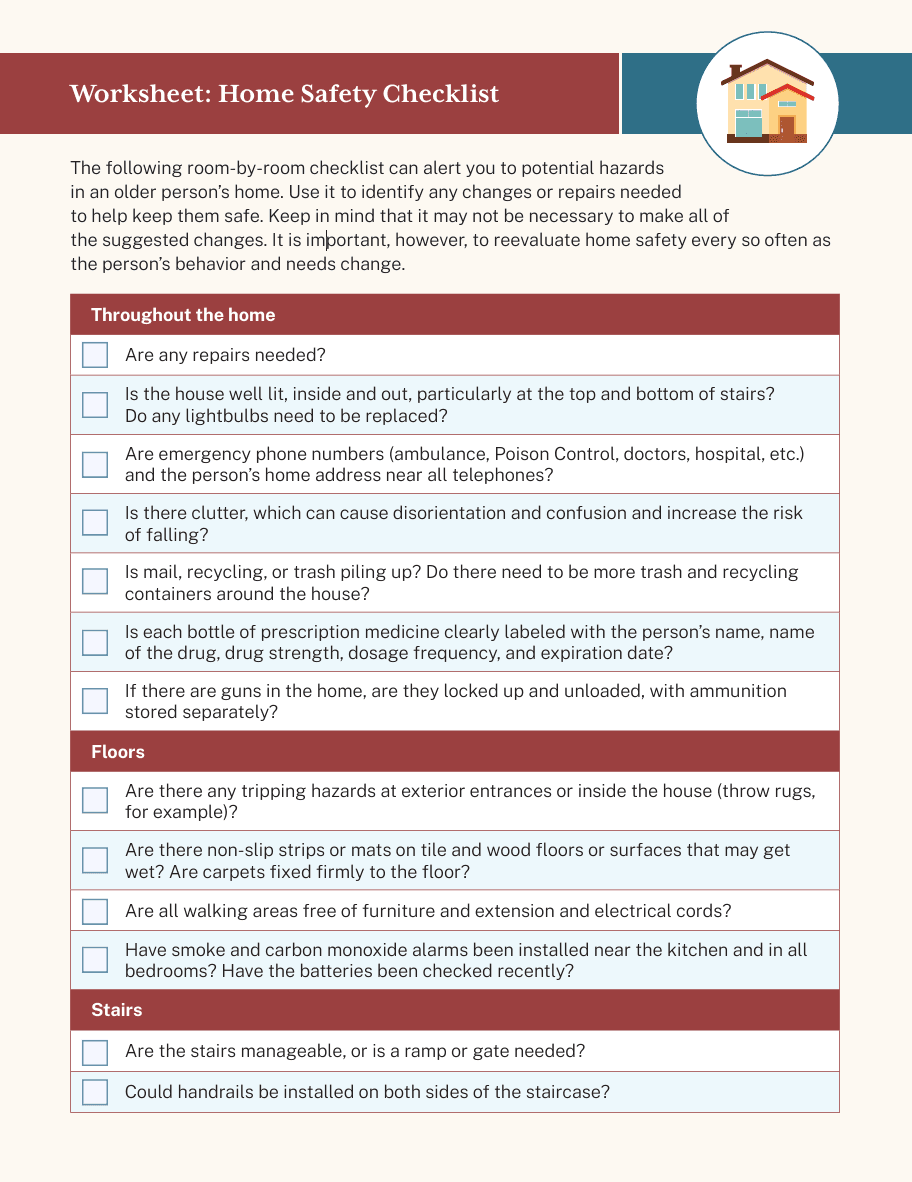
This Home Safety Checklist worksheet from the National Institute on Aging (NIA), part of the National Institutes of Health, gives caregivers a practical, room-by-room tool for identifying and fixing hazards in a loved one’s home — with particular attention to the needs of people living with Alzheimer’s disease and related dementias. It turns the vague worry of “is the home safe?” into a concrete, actionable list.
The checklist walks through the home systematically, prompting caregivers to look for and address common dangers: fall hazards like loose rugs, clutter, and poor lighting; risks in the kitchen and bathroom; fire and burn hazards; poisoning risks from medications and cleaning products; and the need to secure potentially dangerous items. For people with dementia, it also addresses wandering and the importance of safe, simplified environments. Because it comes from a trusted federal health authority, the guidance is reliable and evidence-informed.
This resource matters because falls and home accidents are leading causes of injury among older adults, and most are preventable with simple modifications — yet caregivers often don’t know what to look for. A structured checklist ensures nothing important is overlooked and gives caregivers confidence that they’ve addressed the key risks. For families working to make a home safer, especially for someone with cognitive change, the NIA checklist is an authoritative, free starting point available to download at nia.nih.gov.
What you'll get from this resource
- A free room-by-room home safety checklist from the National Institute on Aging.
- Covers fall, fire, burn, and poisoning hazards, with attention to dementia-related risks like wandering.
- Turns a vague safety worry into a concrete, actionable list, from a trusted federal authority.
- Download it free at nia.nih.gov.
Frequently asked questions
Room-by-room hazards including falls (loose rugs, clutter, lighting), kitchen and bathroom risks, fire and burn hazards, poisoning risks, and dementia-related concerns like wandering.
Caregivers making a home safer for an older adult, with special attention to people living with Alzheimer’s or related dementias.
Download the free worksheet from the National Institute on Aging at nia.nih.gov.
We're here to help.
You've found your partner in caregiving. Connect with your local Area Agency on Aging for personalized services, programs, and support in your area.